
Ideas
A rank-monitoring workspace for focused teams
A weekly workspace that helps small SEO teams keep query changes, page notes and next actions together.
By Michael Santiago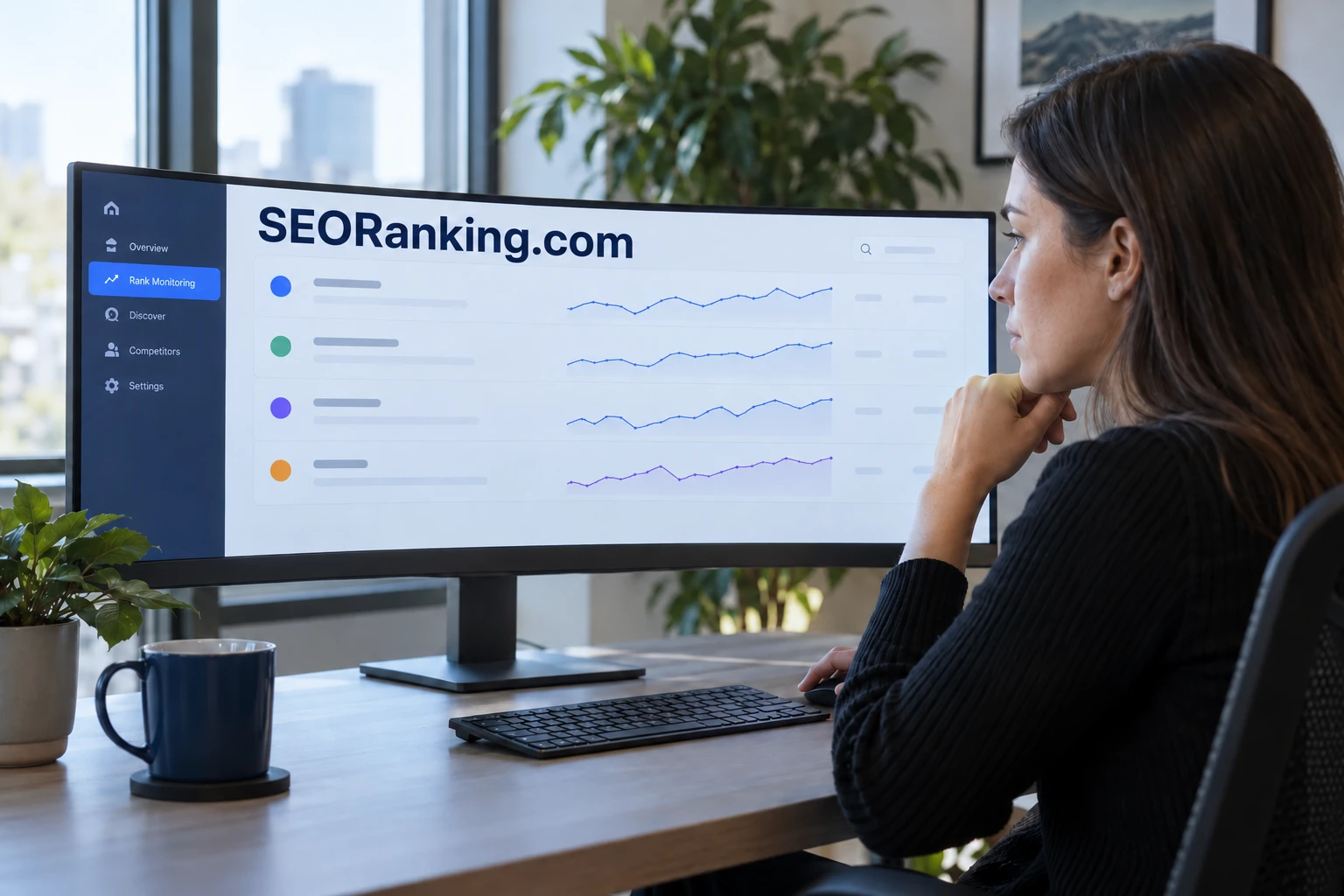
A small in-house SEO team can have plenty of charts and still struggle to decide what deserves attention on Monday morning. One possible business for SEORanking.com is a compact workspace built around that weekly decision. The customer would be a team responsible for a defined website or product area, with enough search work to need a repeatable review but little appetite for another sprawling dashboard.
This is an illustrative product concept. The domain is available for acquisition; the software described here has not been built as part of the offer. The name fits a product centered on monitoring search visibility, while the product's own positioning would need to specify whose work it makes easier.
Start with one weekly output
The first offer could be a review sheet for a saved group of queries and pages. It would show the comparison period, the source of the data, notable changes and the team's notes. The useful result is a short queue of questions with owners, not a claim that every movement has an obvious cause. A founder could prototype this output manually before building an elaborate interface.
For example, imagine a three-person team at a software company reviewing twenty important help pages. One person looks after technical changes, another manages content and a third coordinates the release schedule. Their weekly report currently arrives as several exports. The prototype would connect a changed page to the relevant query group and a dated note, so the team can decide whether to inspect it, wait for more evidence or assign a follow-up.
The example is deliberately narrow. It avoids the need to serve every market and every reporting style in the first version. During customer interviews, ask for a recent review meeting to be described step by step. Which files were opened? Where did somebody lose context? Which question remained unanswered when the meeting ended? Those details are more useful than asking whether another dashboard sounds appealing.
Keep different measurements distinct
A product design should make the source and meaning of each measure visible. Google's metric documentation explains that average position summarizes observed impressions; it is not a fixed position that every searcher sees. A separate rank-tracking source would need its own explanation of collection conditions. Combining them under a single unexplained rank label would make interpretation harder.
The first interface could use a source label beside each view and preserve filters in saved reports. A teammate opening a link should be able to see the date window, country, device and query group that shaped the original observation. If a filter changes, the report should make that difference obvious rather than let two people discuss different selections as though they were identical.
An annotation should also have a clear scope. A note about one landing page belongs to that page or a named group, not every query in the account. A site-wide release deserves a wider label. Making scope explicit helps a future reviewer decide whether a note is relevant without reading every entry from the past quarter.
Build the smallest dependable workflow
A first release could have four steps: select a property, save a review group, compare two periods and assign a question. That is enough to test whether the product belongs in the team's routine. Exporting the review and retaining a readable history may matter more initially than automatic recommendations. The customer should be able to leave with their own records.
Execution would require permissioned data access, secure handling of account connections, predictable imports and support when a connection fails. The founder should map those obligations before setting a subscription price. A mockup can test comprehension, but it cannot prove that imports will remain reliable or that the cost of supporting them will fit the business.
Use the Search Console Performance report documentation to check the source report's available views. Then document which parts the prototype actually uses. Avoid promising complete coverage of every search surface if the product only supports one report type. A limited, clearly described scope is easier for a trial customer to evaluate.
Distribution through a working example
One credible path to early customers is a public demonstration of a weekly review using synthetic data. Show a change that deserves investigation, one that probably needs patience and one that cannot be interpreted because the comparison changed. Invite in-house leads to critique the workflow. Their objections can reveal what would prevent adoption inside a real team.
The demonstration should end with a concrete invitation to try the review on consented data. Keep the pilot small enough to observe actual use. Ask whether the team opened the report before its meeting, whether notes carried into the following week and whether anyone took an action from it. A polite response to a sales presentation is a weaker signal than repeated use during ordinary work.
Decide what earns the next build
Set a few learning questions before the pilot begins. Can the team understand the saved report without the founder explaining it? Does somebody take responsibility for the questions it raises? Can the report survive a missed week without losing its context? These observations can guide development without turning the pilot into a claim of proven commercial demand.
The immediate next step is to interview five in-house SEO leads and prototype one weekly change report. Write down the input required, the output produced and the task the team would otherwise perform. If that task is worth solving, a more detailed product plan can follow. To explore acquiring the address for this direction, inquire about SEORanking.com and describe the team and workflow you intend to serve.